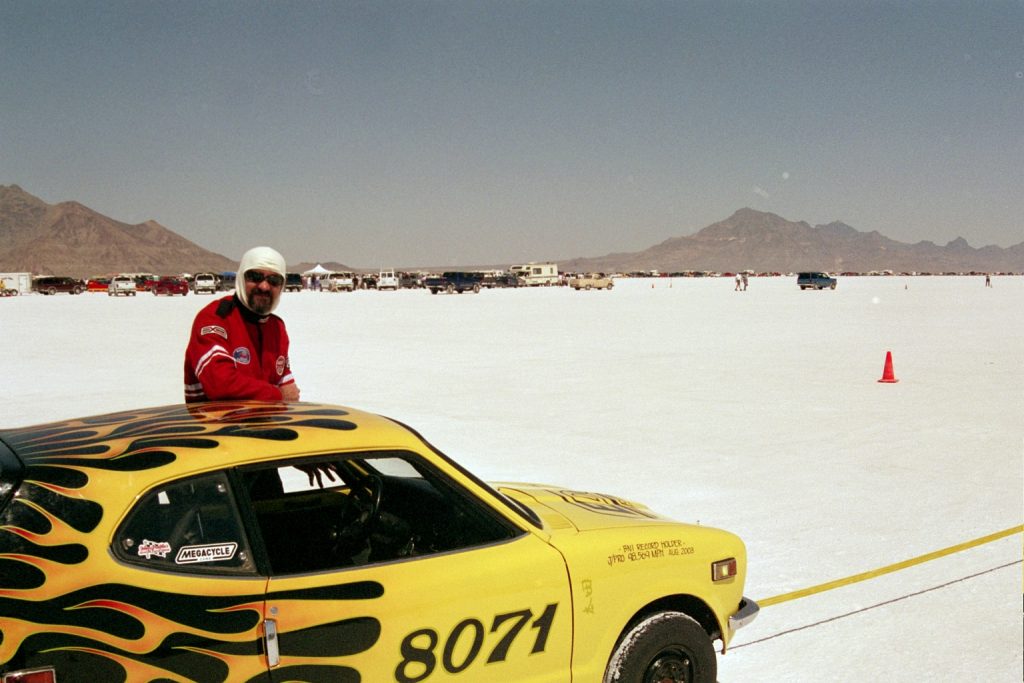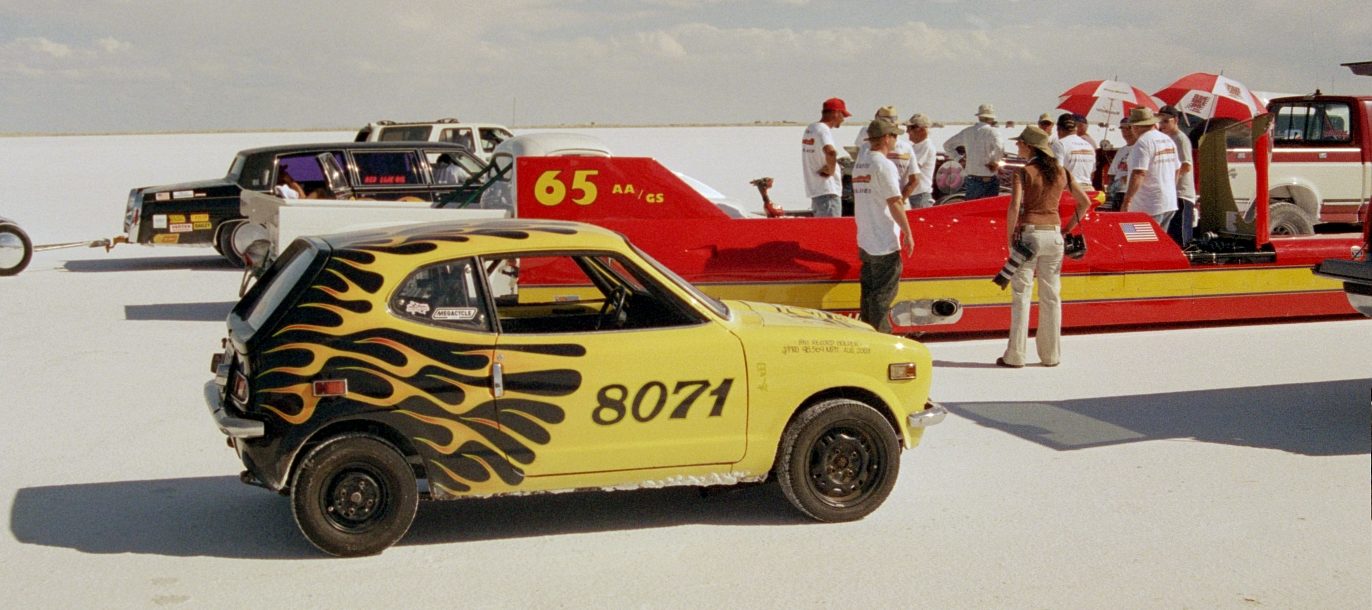
When I first got started in land speed racing, I met Michael Crowther through Engine Dynamics. How that introduction happened is a story for another time, but it put me in contact with someone who looks at engines as complete systems, not just collections of parts.
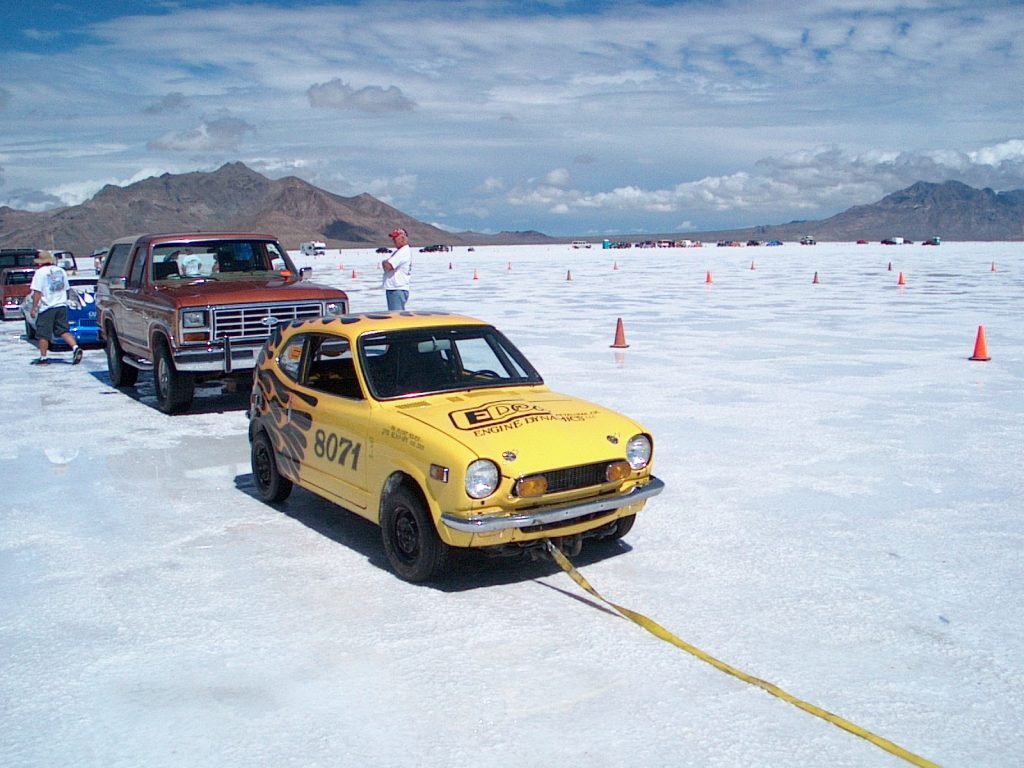
At the time, my car was a 1971 Honda 600 Coupe running in J Production at Bonneville. It was air cooled, small displacement, and about as far from a modern EFI platform as you could imagine. In early runs, with the engine still at its original 600cc and using a carburetor, the car managed 82 mph. That was enough to get through tech and prove the car could survive on the salt, but it also made one thing clear. There was a lot more potential left.
Bonneville adds its own challenge to any engine combination. The salt flats sit at roughly 4,200 feet above sea level, and on hot days the effective air density can reach 6,500 feet or more. For a small displacement, naturally aspirated engine, that thin air is unforgiving. Any inefficiency shows up immediately, and power that looks fine on paper disappears quickly on the course.
The existing class record was held by a 750cc Crosley that had gone 89 mph. That gave us a concrete target. We had room to grow within the rules, but every gain would have to come from refinement and execution, not shortcuts.
Growing the Engine and Rethinking Fuel and Spark
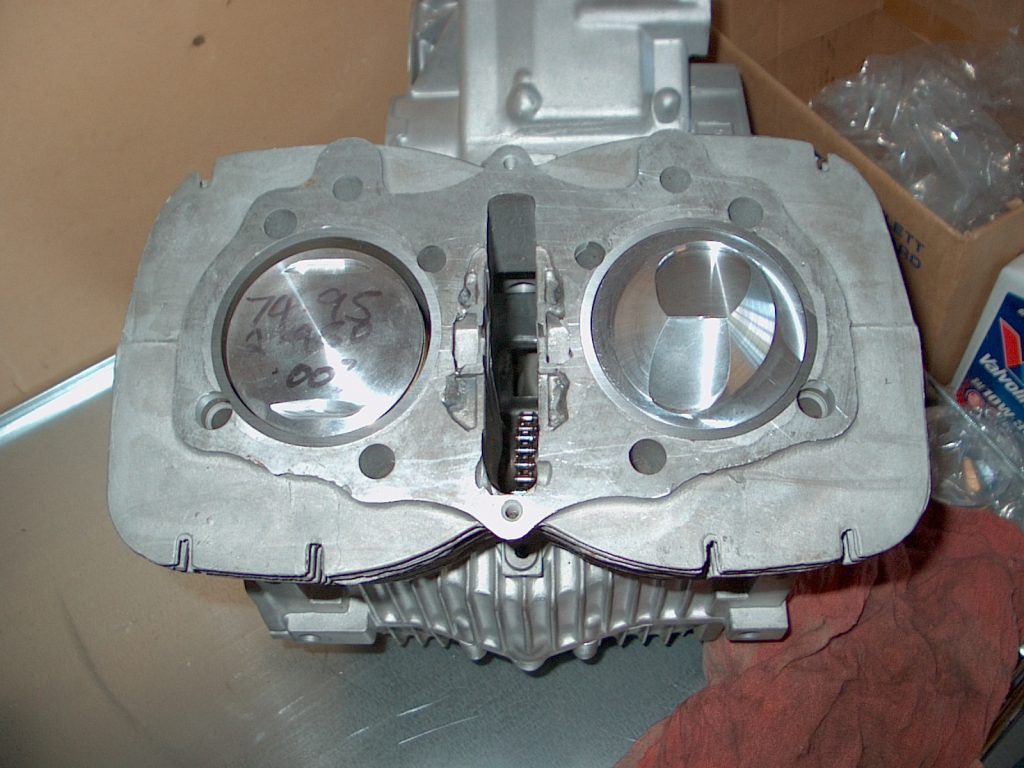
That same year, Mike designed a set of custom 700cc pistons and figured out how to offset bore the cylinders to gain displacement while still using the stock block and cylinders as required by the class. Increasing displacement was not just a machining exercise. The larger cylinders encroached on oil passages that originally ran up through bolt holes, so oil routing had to be rethought internally. Custom copper head gaskets finished the package and made it reliable.
As the engine evolved, we also decided to rethink how fuel and ignition were handled. This was when EFI entered the picture.
At the time, Mike was considering becoming a distributor for Electromotive. His approach was practical. If one EFI system could work well in three very different environments, then it would be versatile enough to recommend. Those environments were my air cooled Bonneville car under sustained load, his older El Camino as a regular street driver, and a customer’s serious quarter mile drag car.
I bought the Tec3r system from Mike and installed it on the Honda.
Starting Simple With Throttle Body Injection
We did not jump straight into a complex setup. We started with throttle body injection using a GM style TBI unit from a Chevy V6 that we found at a local pick and pull yard.
What made this such a good choice for adapting EFI to a car that never had it was that everything we needed was contained in one part. The injector, throttle position sensor, and idle air control motor were all integrated into the same throttle body.
For someone used to carburetors, this is an important mental shift.
In a carburetor:
- The main jets handle steady fuel delivery
- The accelerator pump adds fuel when you open the throttle
- The idle screw and bypass passages control idle speed
In a throttle body EFI setup:
- The injector replaces the main jets
- The Throttle Position Sensor, or TPS, tells the ECU how quickly and how far you are opening the throttle, which replaces the accelerator pump function
- The Idle Air Control, or IAC, meters air around the throttle blade to control idle speed automatically
Having all of that in one factory designed unit dramatically reduced parts count, wiring complexity, and fabrication. Instead of mounting separate injectors, a TPS, and an IAC, we could focus on getting the fundamentals right.
I took the stock intake manifold and the throttle body to a local fabricator, who built an adapter that let us mount the TBI cleanly. This was not exotic work. It was careful planning and execution.
Crank Trigger and Mechanical Setup
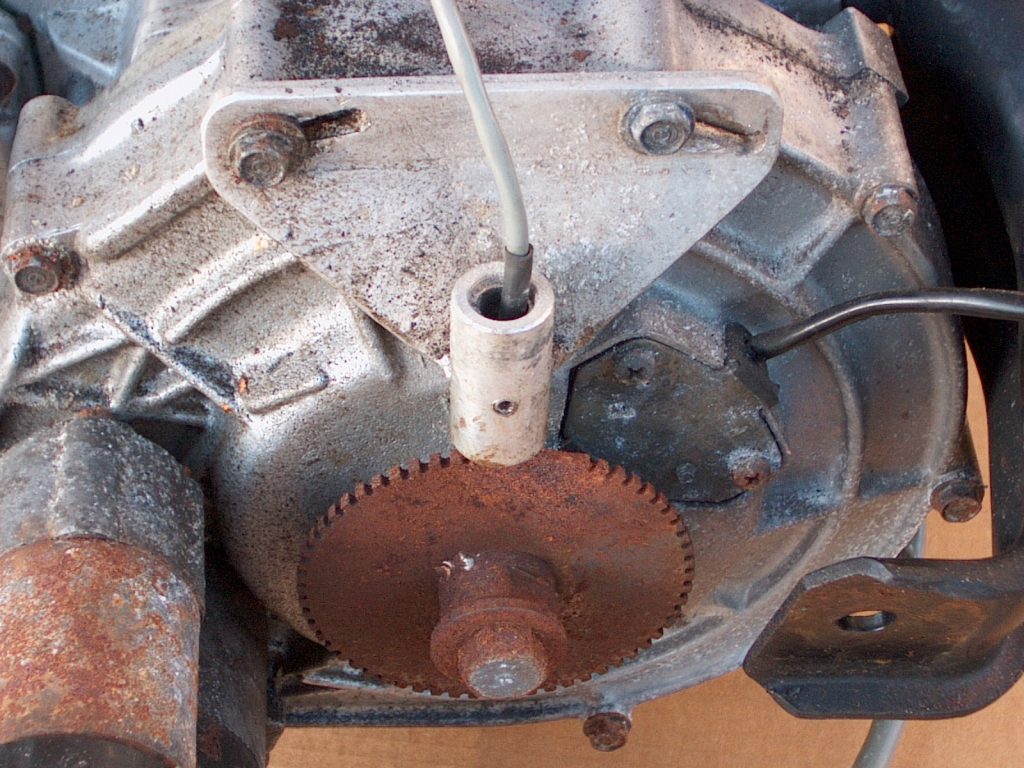
For engine position, the fabricator machined off the original pulley that drove the mechanical fan and mounted a 60 2 trigger wheel in its place. We switched to an electric fan, which simplified packaging and freed up space. He also made a rigid crank sensor bracket with roughly 30 degrees of adjustability.
Hint: If you ever plan to race in Bonneville – rust-proof everything before it goes onto the vehicle! Lesson learned here . . .
This crank sensor is one of the most important differences between EFI and a carburetor.
On a carbureted engine, the distributor decides when the spark happens based on mechanical and vacuum advance. In an EFI system, the ECU controls timing, but it can only do that if it knows exactly where the crankshaft is at all times. The trigger wheel and crank sensor provide that reference.
Deciding where to place the trigger wheel relative to top dead center took some thought up front, but once that decision was made, the rest of the setup was straightforward. Like many EFI tasks, this feels intimidating until you realize it is mostly about planning, not constant adjustment.
Learning How EFI Wants to Be Tuned
Once everything was installed, I made a mistake that many first time EFI users make. I dove straight into tweaking. Fuel tables, timing changes, adjustments everywhere. That led to a few days of frustration.
Eventually, I stopped, wiped the slate clean, and started over with a fresh base configuration in Wintec. This time, I followed the manual in order. I verified timing first, then worked through fuel and idle methodically. With a laptop in the car, I had the engine idling and drivable in about 20 minutes.
That experience completely changed how I thought about EFI. It was not difficult. It was procedural. When you respect the order of operations, the system rewards you.
Sensors Explained in Carburetor Terms
One of the reasons EFI looks intimidating is the number of sensors involved. In practice, most of them simply replace things carburetors already do mechanically.
- MAP sensor
This measures manifold pressure and tells the ECU how hard the engine is working. Think of it as replacing vacuum signals used in carburetors for load sensing and power enrichment. - Throttle Position Sensor (TPS)
This tells the ECU how fast and how far the throttle is opening. It replaces the accelerator pump by allowing the ECU to add fuel during rapid throttle movement. - Idle Air Control (IAC)
This controls idle speed by bypassing air around the throttle blade. It replaces idle screws, choke cams, and manual throttle input during warm up. - Wideband O2 sensor
This measures how rich or lean the engine is running. It is similar to reading spark plugs, but in real time. Helpful, but not strictly required. - Crank sensor
This replaces the distributor’s role in determining engine position. Without it, EFI cannot control timing accurately.
Seen this way, EFI does not add complexity so much as it replaces springs, passages, and mechanical guesses with sensors and repeatable logic.
Optional Does Not Mean Required
One of the things I appreciated most about the Electromotive system was how modular it is.
We used a separate wideband O2 sensor, but it was not required to get the car running or even to tune it effectively. On the chassis dyno, tuning was quick and straightforward.
Cold start enrichment on an air cooled engine was handled with a simple switch and resistor network, essentially a repeatable manual choke.
Nothing forced complexity. We added features only when they made sense.
What GPI and GPO Pins Really Enable
Two features that highlight this flexibility are the General Purpose Inputs and General Purpose Outputs, usually referred to as GPIs and GPOs.
GPIs allow the ECU to listen to external signals. These might be switches, conditions, or thresholds that tell the ECU to behave differently under specific circumstances.
GPOs allow the ECU to control external devices. Common examples include electric fans, pumps, warning lights, or changing strategies based on engine conditions.
The engine will run perfectly fine without using a single one of these pins.
Where they become powerful is when you want to move beyond simply running and start refining behavior.
We used GPIs and GPOs in ways that were very specific to our application. The details are intentionally left out here, but the outcome matters. Those tools, combined with logging and careful iteration, were a major factor in pushing the car past 104 mph on the salt.
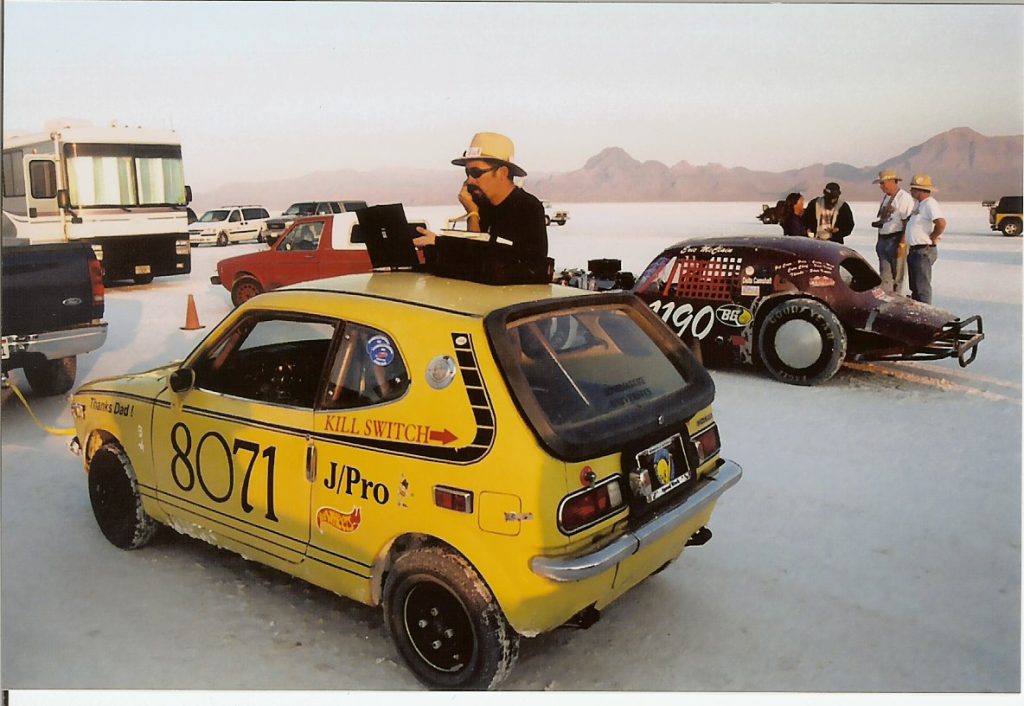
At that point, gains were no longer coming from obvious tuning changes or displacement increases. They were coming from using the ECU as a decision maker, not just a fuel and spark controller.
One of my favorite photos from that period shows me sitting in the car on the salt, laptop open, talking with Electromotive tech support while making adjustments. It perfectly captures what aftermarket EFI does well. You are not guessing. You are observing, adjusting, and verifying.
A Fuel Pressure Lesson Worth Sharing
One of the most valuable lessons from this setup had nothing to do with software.
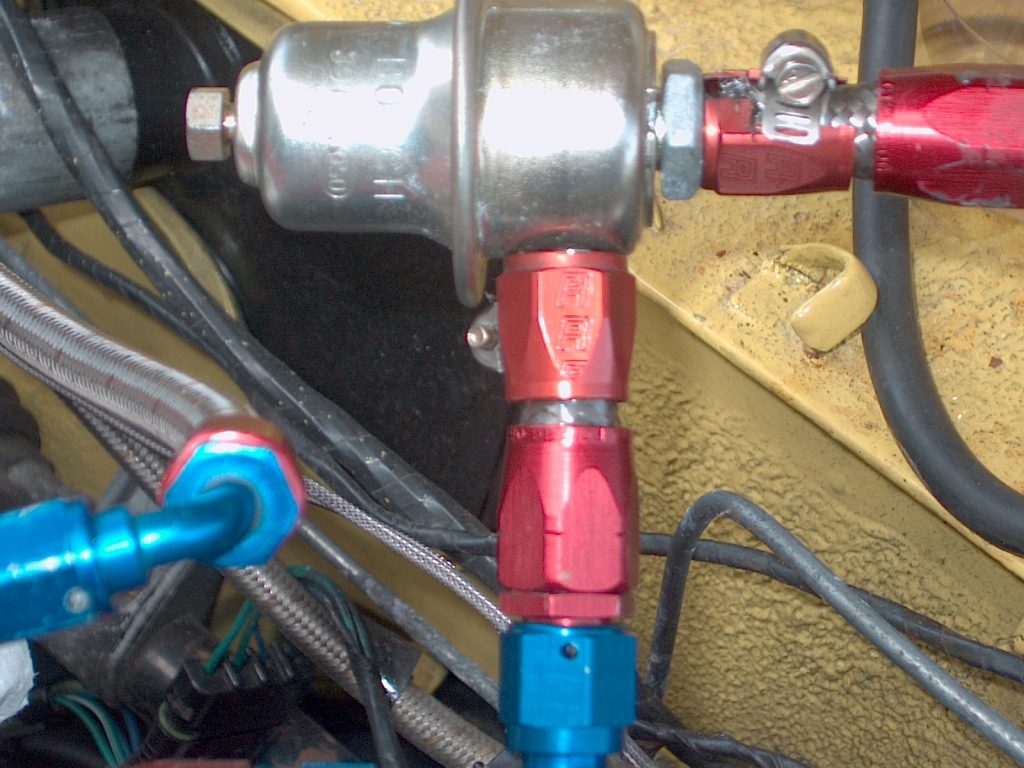
We added a fuel pressure gauge in the engine compartment. I skipped the more expensive in car gauge to save money, and that same mindset led me to buy a generic fuel pressure regulator. Over time, it began to fail.
Performance slowly degraded throughout the day. Without O2 data early on, it looked like a tuning problem. It was not. Fuel pressure was drifting.
EFI did not cause the issue. It helped uncover it.
The Car Keeps Evolving
What stands out looking back is not that EFI was magical. It is that it scaled.
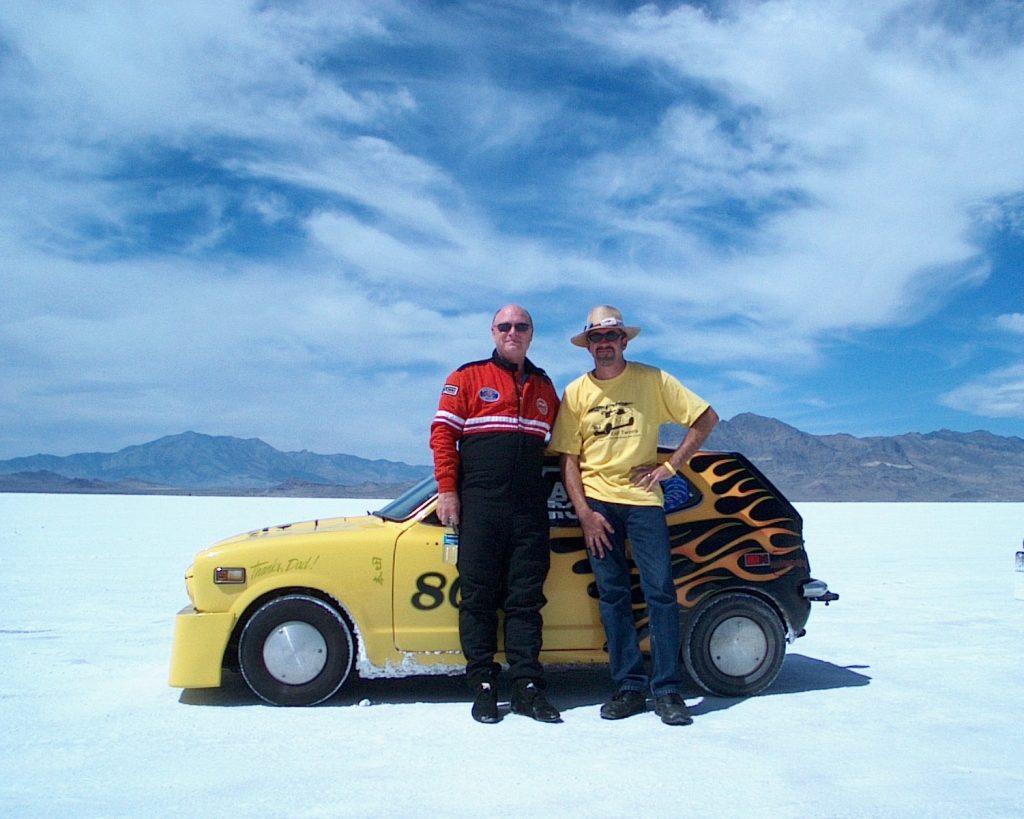
The same core system stayed with the car as it evolved. In a different class, with a different configuration, the car later went 106 mph, driven by my good friend Chris Clay.
Different rules, different setup, same philosophy.
Final Thoughts
After living with this system, I am convinced that adapting aftermarket EFI to a car that never had it is far more approachable than many people assume. You do not need to wire every pin. You do not need every sensor. You do not need to get everything perfect on day one.
If you can plan carefully, follow instructions, and resist the urge to randomly tweak, EFI can be easier and more predictable than carburetors.
For me, the Electromotive system was not just about making power. It was about having a framework that could grow with the engine and the goal. That flexibility is what helped turn an 82 mph car into a 104 mph car, and later beyond, in some of the thinnest air most engines will ever see.
If you are on the fence about EFI, my advice is simple. Start simple, follow the process, and let the system do what it was designed to do.